
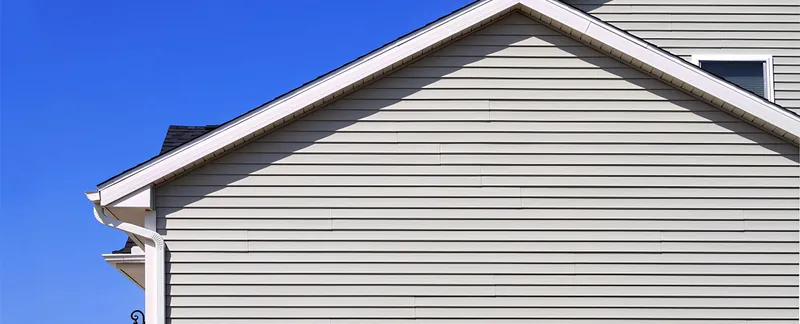
Siding
Siding installation, repair and replacement
Siding is your home’s rain jacket, and like any jacket it works with the layers underneath. We install, repair and replace vinyl, fiber cement and wood siding.
Prefer to talk? Call (314) 222-9529
Siding is not waterproof, and it is not meant to be. The Energy Department’s building science guidance puts it plainly: most exterior wall cladding leaks, which is why the barrier and flashing behind it do the real work of keeping walls dry.
That shapes how we approach every siding job, from a few hail-cracked panels to a full re-side. When siding comes off, what is behind it gets a look too, and we talk through vinyl, fiber cement and wood with you before anything is ordered.
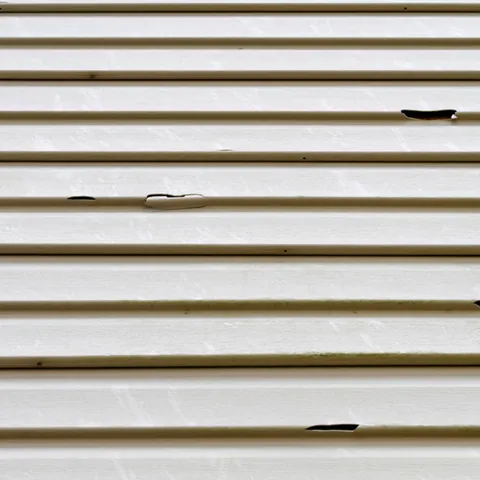
Signs your siding needs work
Cracks, holes or broken panels
From hail, a stray ball or a rock thrown by a mower. Wind-driven hail can tear up siding, NOAA’s severe storms lab notes.
Buckled or wavy vinyl
Vinyl has to move as temperatures change. The industry installation manual calls for about a dime’s thickness of clearance under each nail head, and panels nailed too tight cannot move.
Soft spots, rot or stains
Swollen trim, soft sheathing or water stains on the inside of an exterior wall mean water is getting behind the siding.
Fading and chalky surfaces
On its own that is cosmetic, but check whether the panels have also turned brittle.
Gaps at windows and trim
Open joints or failed caulk where siding meets windows, doors and corner trim let water reach the wall behind.
Holes in wood siding
Woodpeckers and insects both leave marks. DOE’s siding guide notes that cedar offers moderate protection against termites while other woods do poorly.
How it works
How a siding project goes
- 01
Free estimate
We look over the siding, the trim and the flashing at windows, doors and the roofline, and photograph what we find.
- 02
Choose the material and scope
Repair, partial replacement or a full re-side, in the material that fits your house, budget and appetite for upkeep.
- 03
Prepare the wall
Damaged siding comes off, and the barrier and flashing behind it are checked and repaired where needed.
- 04
Install
New siding and trim go on, tied in with the flashing around windows, doors and the roofline.
- 05
Cleanup and final inspection
We clean up thoroughly and close out the job with a final inspection.
Options
Vinyl, fiber cement or wood
Vinyl
Rated high for moisture and pest resistance in DOE’s comparison, and it does not need painting. It rates low for hail and fire: some products crack when struck, and vinyl melts at relatively low heat.
Fiber cement
Rated high for fire, moisture and pest resistance and medium for hail. It is rigid and can crack when struck, and DOE’s guide says to prime all six sides of each board.
Wood
The classic look on older homes, rated medium for hail. It needs its finish kept up, and DOE recommends priming all six sides and a rain screen gap behind it to resist rot.
What keeps a wall dry
The vinyl siding installation manual is clear that vinyl is a cladding, not a water-resistive barrier, and must go over one. For board siding such as wood and fiber cement, DOE’s guidance recommends a rain screen: furring strips or a drainage mat that leave a small air gap so the back of the siding can drain and dry.
Flashing ties it together. The barrier has to lap over the flashing at windows and doors, so water running down the wall is sent back outside instead of into it.
Siding after a storm
After hail, check the walls that faced the storm. Cracked or punctured siding can belong in the same insurance claim as the roof, so have it photographed during the same inspection. Our storm damage page explains what our claim help covers.
Free inspection
We look, photograph what we find and walk you through it. No obligation, no pressure.
Get a free inspectionor call (314) 222-9529
Fixed on the spot
I had a leak in my roof and called a couple different roofing companies to check it out. None of them could figure out where it was coming from, they just told me I’d need a whole new roof. Then I called Correll Roofing Company. Curtis came out…
Knowledgeable, polite, and responsive
I contacted Correll Roofing about some shingles that I lost off of my roof during this last round of high winds that we experienced. Jon responded to my inquiry quickly, came out to my home and replaced the missing shingles in a very timely manner.…
Reassured me and walked me through the process
I had the pleasure of working with Devin Stinson and am currently getting my roof replaced. I had waited almost too long to do it as I am a first time homeowner. The process was a little scary but Devin reassured me and walked me through the process…
FAQ
Siding: questions
Ask us anything at (314) 222-9529.
Can you replace just a few damaged pieces?
Usually, yes. The catch is matching: older siding fades and profiles change, so we look for the closest match and show it to you before work starts.
Is vinyl or fiber cement the better choice?
Neither wins everywhere. Fiber cement holds up better to fire and hail, while vinyl does not need painting. Your budget, the look you want and how much upkeep you will do should decide it.
Will new siding lower my energy bills?
We do not promise energy savings from siding. If comfort or energy use is the real goal, look at the wall’s insulation and air sealing as a whole, and ask us what is practical on your house.
Can you side a new addition to match the house?
We install siding on additions as well as existing walls. Matching is easier when the original product is still made, so bring a leftover piece or the paperwork if you have either.
How close can the grill sit to vinyl siding?
Farther than you might think. DOE’s siding guide notes that vinyl melts at relatively low temperatures, so keep grills, fire pits and patio heaters well away from vinyl walls and check the manufacturer’s guidance.
Can hail damage siding without my noticing?
Yes. Small cracks and punctures hide in shade, behind shrubs and high on gables. Walk the walls that faced the storm, and let us document what we find.
Guides
Read before you decide.
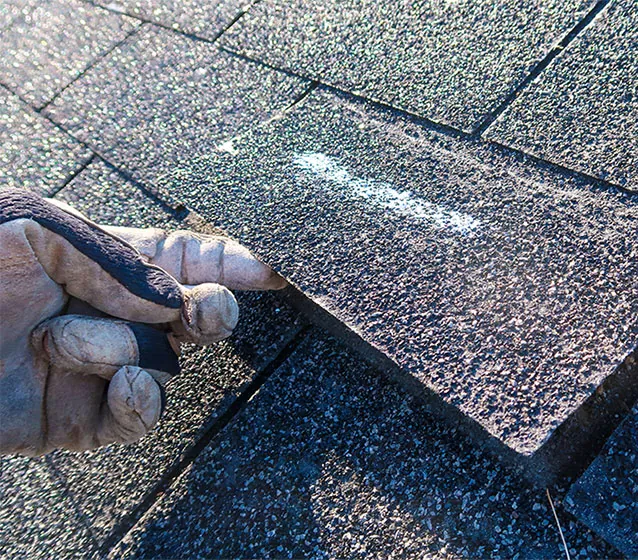
Signs of hail damage
Hail bruises shingles, dents soft metal and cracks siding, and much of it cannot be seen from the yard. Here is what each kind of damage looks like and which hail sizes start to matter.
Read the guideAfter a hail or wind storm
A calm checklist for the first two days after hail or high wind. Stay safe, check from the ground, document the storm date, protect the house, call your insurer and sign nothing at the door.
Read the guideRelated services
Often done together.
Storm and Hail Damage Repair
Hail and wind damage found, photographed and repaired, with help through your insurance claim from first call to final check.
Learn moreGutters and Downspouts
Seamless, custom-fit gutters, gutter repair and cleaning, and downspouts that carry roof water well away from your foundation.
Learn moreSoffit and Fascia
Soffit and fascia repair and replacement, plus vented soffit that lets your attic breathe and keeps the roof edge tight.
Learn moreFree Roof Inspections
A free, no-obligation inspection of your roof and exterior, documented with photos and explained to you in plain terms.
Learn moreSiding across St. Charles County and Greater St. Louis
Roofing With Integrity
Siding, starting with a free look.
No obligation and no pressure. We look over the roof and exterior, photograph what we find and walk you through it. If you have storm damage, we help with the insurance claim from the first call.
- Call(314) 222-9529
- Emailoffice@correllroofingco.com
- Based in O’Fallon1048 Rondale Ct., O’Fallon, MO 63368
- Drainage Plane Behind Exterior Wall Cladding, Building America Solution Center, U.S. Department of Energy
- Moisture-, Impact-, Fire-, and Pest-Resistant Exterior Siding, Building America Solution Center, U.S. Department of Energy
- Vinyl Siding Installation Manual: Important Notes, Polymeric Exterior Products Association
- Severe Weather 101: Hail Basics, NOAA National Severe Storms Laboratory