Asphalt shingles are, in the words of Haag Engineering's researchers, one of the most common and affordable roof coverings on the market. Metal draws interest because it lasts longer and because hail usually dents it rather than breaking it.
Neither material wins in every case. The right choice depends on your budget, how long you plan to stay, the shape of your roof and what your neighborhood allows.
- In the 2025 Cost vs. Value Report, a standing seam metal roof cost about 65% more than asphalt shingles on the same model house in our region, and it recouped a smaller share at resale.
- InterNACHI estimates about 30 years for architectural shingles and 40 to 80 years for metal.
- Hail tends to dent metal panels without breaking them. Shingles fail by bruising and puncture, starting around 1 to 1.25 inches.
- Noise and energy differences are smaller than their reputations suggest, and both materials come in reflective colors.
- Check your HOA rules and your plans for the house before you choose.
The options side by side
Architectural asphalt shingles
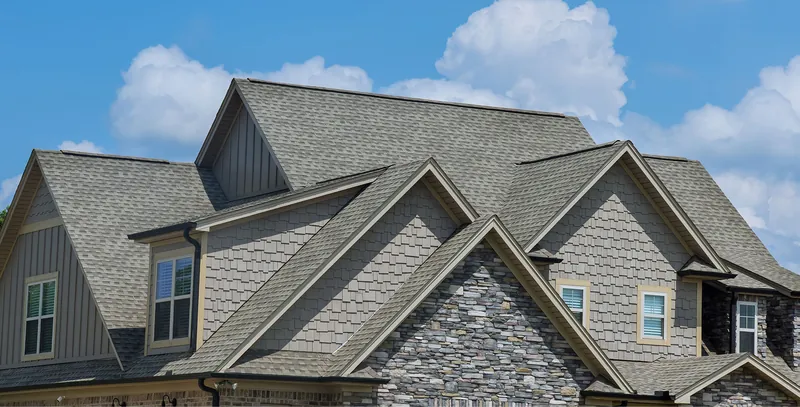
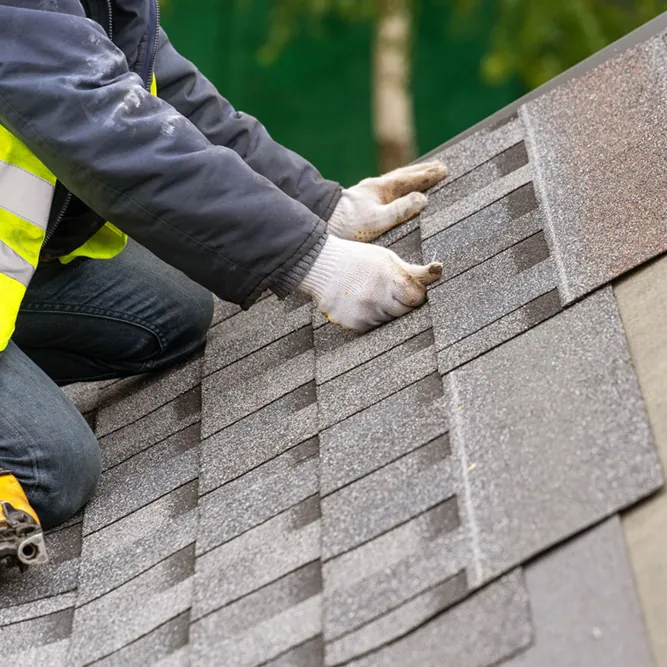
Architectural (laminated) shingles bond a full shingle to a partial one for a thicker, layered look. Traditional 3-tab shingles are a single layer with slots that read like a brick pattern. InterNACHI's life expectancy chart gives architectural shingles about 30 years and 3-tab about 20, and the thicker product also takes bigger hail before it breaks. Under the 2021 International Residential Code, asphalt shingles need a roof slope of at least 2:12.
Standing seam metal
Standing seam panels join at raised seams, so runoff drains down the panel without running over the joint. On many systems, concealed clips hold the panels to the deck and let the metal expand and contract with temperature. The code allows standing seam on slopes as low as 1/4:12, so it can cover porches and low sections that are too flat for shingles.
Exposed-fastener panels
Exposed-fastener panels are screwed down through the face of the metal, usually with large-head screws sealed by neoprene washers. They are the simpler system, and InterNACHI notes that concealed clips are usually found on the more expensive roofs. The trade-off is that as the metal expands and contracts, those screws can loosen or back out over time, which cuts wind resistance and can let water in. Without lap sealant, the code requires at least a 3:12 slope for this kind of lapped panel.
Metal shingles are a third option. They need at least a 3:12 slope, and as the hail section below explains, they dent differently than panels.
What they cost, by published figures
The most consistent public numbers come from the yearly Cost vs. Value Report from the Journal of Light Construction. Its 2025 edition prices both roofs on the same model house: a 3,000-square-foot hip roof with two skylights, torn off to the bare deck. The asphalt job uses fiberglass shingles weighing at least 235 pounds per square, over new felt or synthetic underlayment. The metal job uses prefinished standing seam panels over synthetic underlayment, with an ice-barrier membrane at the roof perimeter.
| Measure | Architectural asphalt | Standing seam metal |
|---|---|---|
| 2025 job cost, national average | $31,871 | $51,865 |
| 2025 job cost, West North Central region (includes Missouri) | $30,693 | $50,520 |
| Share of cost recouped at resale, same region | 54% | 45% |
| Typical service life (InterNACHI) | About 30 years | 40 to 80 years |
| Regional job cost per year of service life | About $1,020 | About $630 to $1,260 |
The last row is simple division: the regional job cost spread over the service-life estimate. It ignores repairs, interest and inflation, and it assumes the roof reaches its full life.
These are model jobs, not quotes. Real prices move with roof size, pitch, the number of layers coming off, decking repairs and the exact products. Our roof replacement cost guide goes deeper on local pricing.
For short stays, the numbers point one way. In the regional figures, asphalt costs about $20,000 less and recoups a larger share of its cost. If you expect to sell within 10 years, that usually settles it. If you plan to stay for decades, metal's longer life can close the gap.
How long each lasts here
St. Louis is hard on asphalt. NOAA's 1991 to 2020 normals for St. Louis Lambert International Airport average about 47 days a year at 90°F or hotter and about 85 nights at or below freezing. InterNACHI notes that hot climates drastically reduce asphalt shingle life, and the National Association of Home Builders' 2007 study put asphalt roofs at about 20 years.
Metal lasts longer, but not without care. InterNACHI calls seams a weak point of any metal roof, and on exposed-fastener roofs the screws are another, so plan on having fasteners and flashing checked. Through-fastened panels can also show oil-canning, a visible waviness, especially on larger panels.
Ask for the panel thickness, steel grade and finish in writing. A U.S. Steel technical bulletin explains that dent resistance rises steeply with the thickness and strength of the steel, so two metal roofs that look alike from the street can take hail very differently. Our guide to how long a roof lasts covers both materials, and slate, in more detail.
Hail: dents versus function
Hail affects the two materials differently. On asphalt, Haag Engineering's field surveys put the damage threshold at about 1 inch for 3-tab shingles and 1.25 inches for 30-year laminated shingles. Damage there means bruises, punctures and tears that shorten the roof's life.
Impact-resistant shingles rated UL 2218 Class 4 survive a 2-inch steel ball dropped 20 feet onto the same spot twice, but ratings vary. When the Insurance Institute for Business and Home Safety (IBHS) rated 24 impact-resistant shingles in November 2025, most earned Good and none earned its top rating of Excellent. Our impact-resistant shingles guide explains the ratings.
On metal, hail usually dents rather than breaks. InterNACHI notes that hail seldom causes functional damage to metal panels because the deck supports them across most of their surface, while metal shingles can distort until their seams leak. Consultants Koontz and White, writing for the building enclosure group IIBEC, reported that in 50 years of examining hail-struck metal roofs their firm had seen fewer than 10 punctured or split by hail, and that minor dents had not led to corrosion.
The catch is appearance. A dented roof can still keep water out, but you will see the dents, and you will want to know how your policy treats damage that changes the look without causing leaks.
Missouri's Department of Commerce and Insurance notes that some policies carry separate limits or deductibles for roofs. Before you choose metal, ask your agent to explain in writing how your policy would treat hail dents. Our guide to signs of hail damage covers what inspectors look for on each material.
Noise, energy and appearance
Noise. The Metal Roofing Alliance says modern metal roofs go over solid decking and underlayment, and that indoor noise is then comparable to asphalt shingles and sometimes quieter. Ask how your roof will be decked and underlaid.
Energy. The U.S. Department of Energy says a reflective "cool" roof can cut 5 to 20% from a home's cooling costs, with the biggest savings in hot climates, and that cool versions exist for both asphalt shingles and metal. Cool asphalt shingles cost about the same as conventional ones.
DOE adds that a cool roof may raise winter heating needs, though in mixed climates the winter penalty can be smaller than the summer savings, and that it is rarely economical to replace a sound roof just to make it more reflective. Whichever material you choose, the color and the attic ventilation under it affect comfort and cooling costs.
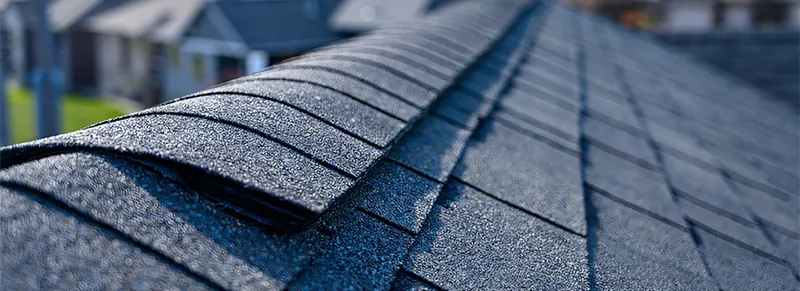
Appearance. Architectural shingles give a textured, layered look. Standing seam gives clean vertical lines and a more modern profile. Exposed-fastener panels show rows of screw heads.
HOA rules and permits
If your home is in a subdivision with a homeowners association or recorded indentures, read the architectural guidelines before you choose a material. Rules can cover roofing material, color and profile, and written approval before materials are ordered protects you. If the guidelines say nothing about metal, ask the board in writing rather than assuming.
Building rules come from your city or county. As of 2026, St. Charles County has adopted the 2021 International Codes with local amendments, and the 2021 residential code sets the slope limits above and bars a new roof over two or more existing layers. Ask your roofer to confirm with your building department whether a permit is needed before work starts.
When each makes sense
Asphalt shingles usually make sense when:
- You expect to sell within the next 10 to 15 years.
- Up-front cost matters most.
- Your HOA requires shingles or restricts metal.
- You want better hail resistance but prefer the look of shingles. Compare Class 4 shingles by their IBHS ratings.
Metal usually makes sense when:
- You plan to stay for decades.
- Part of the roof is too flat for shingles.
- You want a roof that hail is more likely to dent than break, and your insurance treats dents in a way you can accept.
- You like the look and your neighborhood allows it.
Both come with manufacturer warranties that carry registration and installation requirements. Whichever you choose, ask for the full terms in writing.
Correll Roofing Co. installs asphalt shingles, metal and slate, and we can walk you through both options on your own roof during a free estimate. See roof replacement and metal roofing, or contact us.
- 2025 Cost vs. Value Report, national averages, Journal of Light Construction
- 2025 Cost vs. Value Report, West North Central region, Journal of Light Construction
- Roofing Replacement, Asphalt Shingles project description, Journal of Light Construction
- Roofing Replacement, Metal project description, Journal of Light Construction
- Standard Estimated Life Expectancy Chart for Homes, InterNACHI
- Study of Life Expectancy of Home Components (2007), National Association of Home Builders and Bank of America Home Equity
- Mastering Roof Inspections: Metal Roofs, Part 7, InterNACHI
- Mastering Roof Inspections: Metal Roofs, Part 8, InterNACHI
- Mastering Roof Inspections: Metal Roofs, Part 10, InterNACHI
- 2021 International Residential Code, Chapter 9 Roof Assemblies, International Code Council
- Hail Damage Threshold Sizes for Common Roofing Materials, Haag Engineering (American Meteorological Society)
- Hail Damage to Asphalt Roof Shingles, Haag Engineering (American Meteorological Society, 2004)
- The Effects of Hail on Metal Roofing Systems, Koontz and White (IIBEC)
- Hail Damage on Coated Sheet Steel Roofing, U.S. Steel
- IBHS Releases Its Most Expansive Impact-Resistant Shingle Ratings to Date, Insurance Institute for Business and Home Safety
- Other Weather Performance, Metal Roofing Alliance
- Consumer Guide to Cool Roofs, U.S. Department of Energy
- Why Ventilation is Important, Asphalt Roofing Manufacturers Association
- Summary of Monthly Normals 1991 to 2020, St. Louis Lambert International Airport, NOAA National Centers for Environmental Information
- Post-Disaster Claims Guide, Missouri Department of Commerce and Insurance
- Building and Construction Codes, St. Charles County